The United Arab Emirates is an important international business and financial center that attracts professionals, entrepreneurs, investors, and companies from all over the world. If you live or work in Dubai, having a local bank account can make your everyday financial activities easier, including receiving salaries, paying bills, transferring funds, and managing business transactions.
However, the Bank Account Opening UAE process may differ based on your residency status, employment, source of income, and the type of account you require. Banks have identity verification and customer due diligence procedures, so having the right documents ready in advance can help to make the application process smoother.
If you are a newcomer, an experienced expat, self-employed, or a business owner, knowing the requirements before you apply can save time and prevent unnecessary delays.
This guide explains the main types of accounts, typical eligibility requirements and documents, the steps you need to take to apply, and some practical tips for opening a bank account in Dubai (and the UAE in general).
Different Types of Bank Accounts in UAE
Before you start the process of opening a bank account in the UAE, you need to decide how you are going to use the account. Accounts come in many types, each with its own features, eligibility conditions, and fees.
1. Current Account
A current account is generally suitable for day-to-day transactions. Depending on the bank and the account package, it could include a debit card, check facilities, local transfers, international transfers, and access to digital banking.
Current accounts may be useful for people who want to access their money on a regular basis, and for employees who get a salary. Some accounts have minimum salary or minimum balance requirements.
2. Savings Banks
A savings account is designed to allow the customer to keep their money and make a profit, depending on the terms of the account. It might be right for those who want to save money but still want to see what’s in their balance.
When choosing an account, compare interest or profit rates, withdrawal conditions, fees, and minimum balance requirements.
3. Salary A/c
According to their employer’s payroll arrangements, many UAE employees are paid into a bank account of their choice. Some banks have salary account packages that come with eligibility criteria or additional services.
Before you open an account, ask your employer whether it requires salary transfer or banking arrangements.
4. Business Bank Account—
A business account is for qualified companies and commercial activities. It helps in separating the company’s finances from personal expenditure and keeping payments to the business, receipts from customers, payments to suppliers, and accounting records.
Banks may ask for a trade license, incorporation documents, details of shareholders and beneficial owners, and the business activities of the company.
Requirements for Opening a Bank Account in UAE
Different banks and different types of accounts have different requirements. Candidates should check the official eligibility criteria of the chosen bank before applying.
UAE Live
Residents are often required to provide:
• A valid passport.
• A valid UAE residence visa (if applicable).
• An Emirates ID or acceptable evidence of progress of the Emirates ID application if the bank allows.
• Salary certificate, employment letter, or any other proof of income, if needed.
• Proof of residential address, if needed.
• A mobile number and email address in the UAE.
Some banks may ask for additional documents, depending on the applicant’s situation and the type of account.
Visitors and Non-Residents
Non-residents may have fewer account options than UAE residents. Eligibility depends on the bank’s terms and the applicant’s profile. You may be asked for a passport, overseas address information, bank references, proof of income, or source-of-funds documentation.
Not all non-residents are allowed to open a regular current account in the UAE. Before applying, please check what account type is available, if you need to visit in person, and whether there are any balance or transaction limits.
Eligible visitors under certain programs may also be able to open certain digital accounts. The UAE Central Bank will launch a digital account-opening initiative for eligible tourists with a tourist identity in 2026 in collaboration with the relevant authorities and ADCB, for example. Check with the participating bank directly for availability and eligibility.
Entrepreneurs and Self-Employed Individuals
Additional evidence of occupation, income, or commercial activity may be requested from self-employed applicants. Depending on the account and bank, this may include a trade license, contracts, invoices, financial statements, or business registration documents.
“Applications are considered on a case-by-case basis, and lenders may require additional information before they approve.
Documents Needed to Open a Bank Account in Dubai
Correct Document Preparation is an integral part of the bank account opening UAE process. Typical documents that are requested include the following.
Passports and residency documentation—these are to verify your identity and your immigration or residency status where relevant.
Emirates ID: A common identification document that UAE banks ask for from residents as part of the application process.
Proof of address: You may need to provide a tenancy contract, utility bill, or other acceptable document to verify your address.
Proof of employment or income: Depending on the account, you may have to submit a salary certificate, employment letter, payslip, or other proof of income.
Bank Statements: Some banks may require recent statements from a current account to assess your financial standing and transaction patterns.
Information about source of funds: Depending on the circumstances, you may be asked to explain where the money coming into the account is coming from (salary, business income, savings, investments, etc.).
For a company account, banks may ask for the trade license, certificate of incorporation, constitutional documents, shareholder information, details of the beneficial owner, and a board resolution or authorization for the account signatory.
Always check the exact checklist with the bank you have chosen. Requirements can vary based on your nationality, residency, account type, business structure, and risk assessment.
Step-by-Step Guide to Opening a Bank Account in UAE
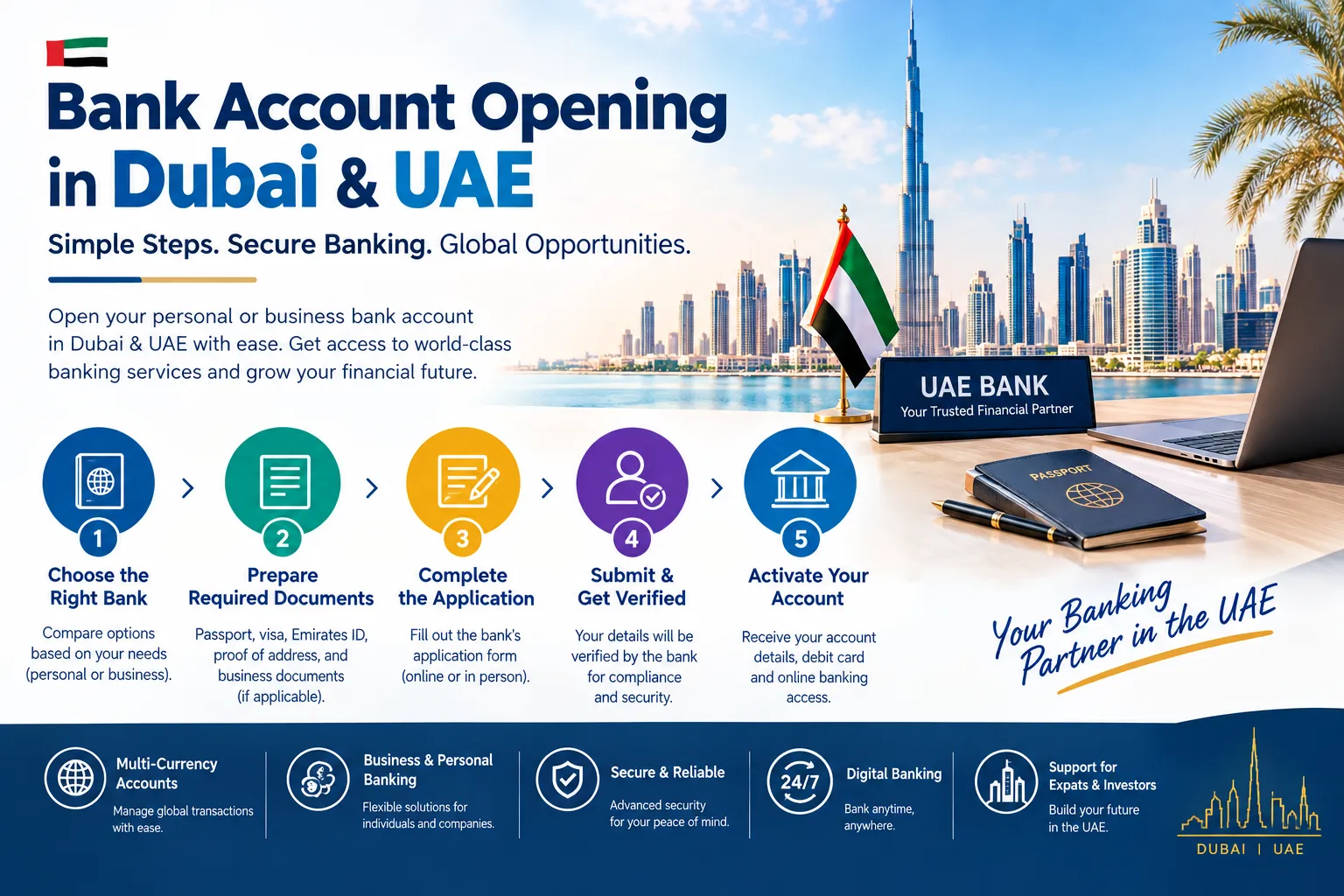
The details vary from bank to bank, but most applications follow a number of common steps.
Step 1: Pick The Right Bank
Consider banks based on your financial requirements, digital banking facilities, branch availability, international transfer services, fees, and account eligibility. If you’re new to Dubai, verify that the bank has an account designed for newly arrived residents.
Step 2: Select the Type of Account
Determine if you require a current account, savings account, salary account, or business account. Conditions regarding the minimum balance, monthly fees, salary requirements, debit card services, transfer limits, and other conditions for keeping the account.
Step 3: Get Your Documents Ready
Gather the documents listed by the bank and make sure all personal information is correct. Your name, passport details, contact details, and address must match your official records.
For business applicants, please make sure all company documents are current and that the person applying has the necessary authority to act on behalf of the company.
Step 4: Send in Your Application
Depending on the bank, you may be able to apply through a website, mobile app, or branch. Digital applications may include document upload, identity verification, and electronic forms.
Book an appointment and carry the required original documents if the bank asks you to visit the branch.
Step 5: Finalize Identity Verification
Banks perform Know Your Customer (KYC) checks to confirm identity and learn the intended use of the account. They may ask about employment, business activity, expected transactions, source of funds, or origin of larger deposits.
Give an accurate answer and supporting documents if asked for. You may have to do some more checks before the application can go forward.
Step 6: Get Approval and Activate the Account
Once the application is approved, the bank will provide the details of the account, how to access digital banking, how to activate the debit card, and set up payment services.
Times for processing vary. If you have all your documentation, the application might go more smoothly, but approval and activation are always subject to the bank's procedures.
Key Tips for Opening a Bank Account in Dubai
With a little preparation, the Bank Account Opening UAE process can be easier.
Compare Minimum Balance Requirements and Charges
Don't choose an account based on what it says it will give you. Take a look at the monthly maintenance fees, minimum average balance requirements, ATM fees, costs for international transfers, fees for converting foreign currencies, and any penalties for not meeting account conditions.
Keep Your Documents Up to Date
Outdated ID, mismatched personal information, or missing company information can slow verification. Before you submit, make sure the document is valid, and your contact details are correct.
Know International Transfer Services
Dubai is home to many international businesses and professionals. If you often send or receive money abroad, check the currencies supported, the fees for transfers, the exchange rates, the processing times, and any limits on how much you can send.
Ask whether the bank needs supporting documents for some international payments.
Be Transparent With Your Money Habits
Please describe your profession, business model, sources of income, and transactions you expect to make. If there is a substantial change in your planned activity after account opening, the bank may ask for new information or supporting documents.
Review Digital Banking Facilities
A good digital banking experience can help make everyday financial management easier. Learn about the mobile app’s features for payments, statements, card controls, transfer services, security features, and customer-support channels.
Beware of False Promises
Avoid anyone promising bank approval or requesting false documents. A service provider may help explain requirements or organize paperwork, but the bank is the final authority on whether or not the account is opened.
UAE personal and business bank account
Your choice of a personal or business account depends on how you earn and spend your money.
A personal bank account is generally used for personal financial activities such as receiving salary, paying household expenses, saving money, and making personal transfers.
A business bank account is for commercial transactions and keeps company money separate from your personal finances. It can also deal with business receipts, supplier payments, payroll, and bookkeeping.
Entrepreneurs should make sure that their business license, activity, ownership structure, and supporting documents are in accordance with the requirements of the bank. For a business account, the checks may be more extensive than a typical personal account—especially if there are complicated ownership structures or cross-border transactions.
You may not want to use a personal account for your business transactions sometimes. Before you decide, confirm the bank’s terms and any legal or regulatory requirements that may apply.
How professional help can help
Those new to banking in the UAE may need a little help in understanding document requirements, comparing account options, or organizing an application checklist. Bank officials may also have to help business owners prepare company records and decide what questions to discuss.
If you are looking for support for bank account opening in the UAE, you can visit ProHub Abu Dhabi to check out the services and the information they have to offer. Check with any provider before you engage them that they are authorized to provide the assistance you require and check their current service scope and fees.
Banks are responsible for their own compliance checks and final approval decisions. A bank will not, of course, accept the application of any consultant.
Summary
Managing your daily expenses, receiving income, transferring money, and running a business can be made much easier by having a bank account in Dubai. The main thing is to pick an account that fits your requirements and to know the eligibility criteria of the bank before you go ahead.
To ensure a successful Bank Account Opening UAE application, you will need valid identification, proof of residency (if applicable), income or business documents, and any other information the bank may ask you for. Before making a decision, consider minimum balances, transfer options, fees, and digital banking.
Requirements vary from bank to bank and customer profile, so use the official guidance of the bank you’ve chosen as your final checklist. Efficient process: Careful preparation, accurate information, and quick responses to verification requests can help make the process more efficient.
FAQs
1. Can foreigners open bank accounts in UAE?
Yes, foreign nationals can open bank accounts in the UAE if they are eligible. The requirements are based on the status of the applicant resident, non-resident, or visitor, the policies of the bank, and the type of account requested.
2. What documents do I need to open a bank account in Dubai?
Typical documents are a passport, residence visa if applicable, Emirates ID for residents, proof of address,, and proof of employment or income if requested. Business applicants might need to have a trade license and documentation showing ownership of the company.
3. Timeframe to open a bank account in Dubai
Processing times depend on the bank, account type, and applicant profile. Some digital applications may be processed quickly, while applications that require further verification or documents may take longer. Check on the expected time frame directly with the bank.
4. Can I open a UAE bank account without an Emirates ID?
Depending on the rules of some banks, they can allow you to start an application while your Emirates ID is being processed. Non-residents and visitors may have other account options. *Please check with the bank for the applicable requirements before applying.
5. Yes, non-residents can open a bank account in Dubai.
Some banks provide account options to eligible non-residents, but availability and conditions vary. Applicants may be asked to provide a passport, overseas address information, bank references, and evidence of income or source of funds. Not all banks will give you a non-resident current account.
6. What is the difference between a personal and business bank account in the UAE?
A personal account is for an individual's financial activities, and a business account is for commercial transactions. Business applications usually require company documents and details of shareholders, beneficial owners, and authorized signatories.
Planning a Business or Legal Process in the UAE?
Get direct expert guidance for business setup and complete corporate PRO services in Abu Dhabi.
Comments (0)
Loading comments...