The United Arab Emirates has emerged as a prime destination for entrepreneurs, startups and international businesses. Dubai, in particular, offers opportunities in trading, real estate, retail, technology, hospitality, and professional services. However, it is essential for businesses operating in the UAE to understand their tax commitments to remain compliant and maximize their financial planning.
One important requirement for eligible businesses is Value Added Tax (VAT) registration. Understanding the VAT registration requirements in the UAE will help business owners to determine if registration is compulsory, prepare the required documents, and avoid delays in the application process.
Whether you’re starting a new business in Dubai or growing an existing one, this guide will assist you to understand the VAT registration requirements, including eligibility, thresholds, the registration process, and the benefits of professional tax services.
What is VAT registration in the UAE?
Value Added Tax (VAT) is an indirect tax levied on many goods and services sold in the UAE. The standard VAT rate is generally 5%, although some supplies are eligible for zero-rating, exemption, or other specific treatment as per the UAE VAT legislation.
VAT registration is the process of registering with the Federal Tax Authority (FTA) to get a Tax Registration Number (TRN), if you qualify.
Once registered, a business must comply with relevant VAT obligations, such as issuing compliant tax invoices, keeping records, filing VAT returns, and paying any tax due within the prescribed timeframes.
Having knowledge of the VAT Registration UAE regulations is essential for businesses in Dubai to process transactions correctly and maintain proper financial records.
VAT Registration Eligibility in the UAE—Who Can Register?
Where a business has taxable supplies and imports (and in some cases taxable expenses) above a certain level, it can register for VAT.
The FTA recognizes two main registration categories, namely mandatory registration and voluntary registration.
1. Why You Need to Register for VAT
A business ordinarily resident in the UAE is generally required to register for VAT if the total value of its taxable supplies and imports exceeds AED 375,000 in the last 12 months or is likely to exceed this threshold in the next 30 days.
For example, a trading company in Dubai whose qualifying taxable turnover exceeds the mandatory threshold will have to determine the registration obligation and apply within the applicable period of time.
Businesses should not wait till the end of the financial year to keep an eye on their turnover. The threshold is judged against the rolling period that applies and the rules that are relevant, and not just the annual profit of the company.
2. Voluntary registration for VAT
If a business does not satisfy the mandatory registration criteria, it may still be able to register voluntarily.
The threshold for voluntary registration is AED 187,500. Eligibility is usually based on the value of taxable supplies and imports or the value of qualifying taxable expenses over the previous 12 months or the amount that is expected in the next 30 days, subject to the relevant conditions.
Where a business incurs VAT on qualifying business purchases and expects to recover that input VAT, then voluntary registration may be of benefit, provided that the relevant recovery conditions are met.
But registration itself brings ongoing compliance obligations. Before applying, companies should weigh the financial benefits against the administrative costs.
3. VAT registration for businesses not resident in the UK
The rules on registration may be different for non-resident businesses making taxable supplies in the UAE. In particular, where a non-resident makes taxable supplies in the UAE, they will generally be required to register regardless of the standard turnover threshold, where no other person is liable to account for the VAT due.
International businesses should conduct due diligence on the transaction structure and supply arrangements prior to undertaking taxable activities in the UAE.
Please consult the official VAT registration guidance of the Federal Tax Authority for the most up-to-date eligibility requirements.
Documents Needed for VAT Registration in Dubai
Getting documentation properly prepared is an important part of VAT registration in the UAE. The documents requested depend on the legal structure of the applicant, business activities, and registration circumstances.
Typical documents required include
• Valid trade license: Up-to-date license issued by the relevant licensing authority of the UAE, including branch licenses where applicable.
• Company incorporation documents, including certificate of incorporation, memorandum of association or partnership agreement (where applicable).
• Identification documents: Copies of passports and Emirates ID for owners and authorized signatories, as applicable.
• Financial records: Sales reports, declarations of taxable turnover, invoices, and other supporting evidence.
• Commercial documents: Contracts, purchase orders, and agreements supporting actual or expected taxable supplies.
• Authorization documentation: Power of Attorney or other evidence of authority where required.
• Bank details: Company bank details or bank letter as required or applicable.
• Customs information—relevant customs information for companies that import or export goods, if applicable.
The FTA may require further evidence, depending on the nature of the business and the registration application. For example, if an applicant’s projections are based on expected revenue, contracts or purchase orders validating those projections may be needed.
Businesses should ensure the application’s information matches their supporting documents. Inconsistent turnover figures, incomplete identification records, or unclear business activities can lead to additional questions and delays.
VAT Registration in Dubai
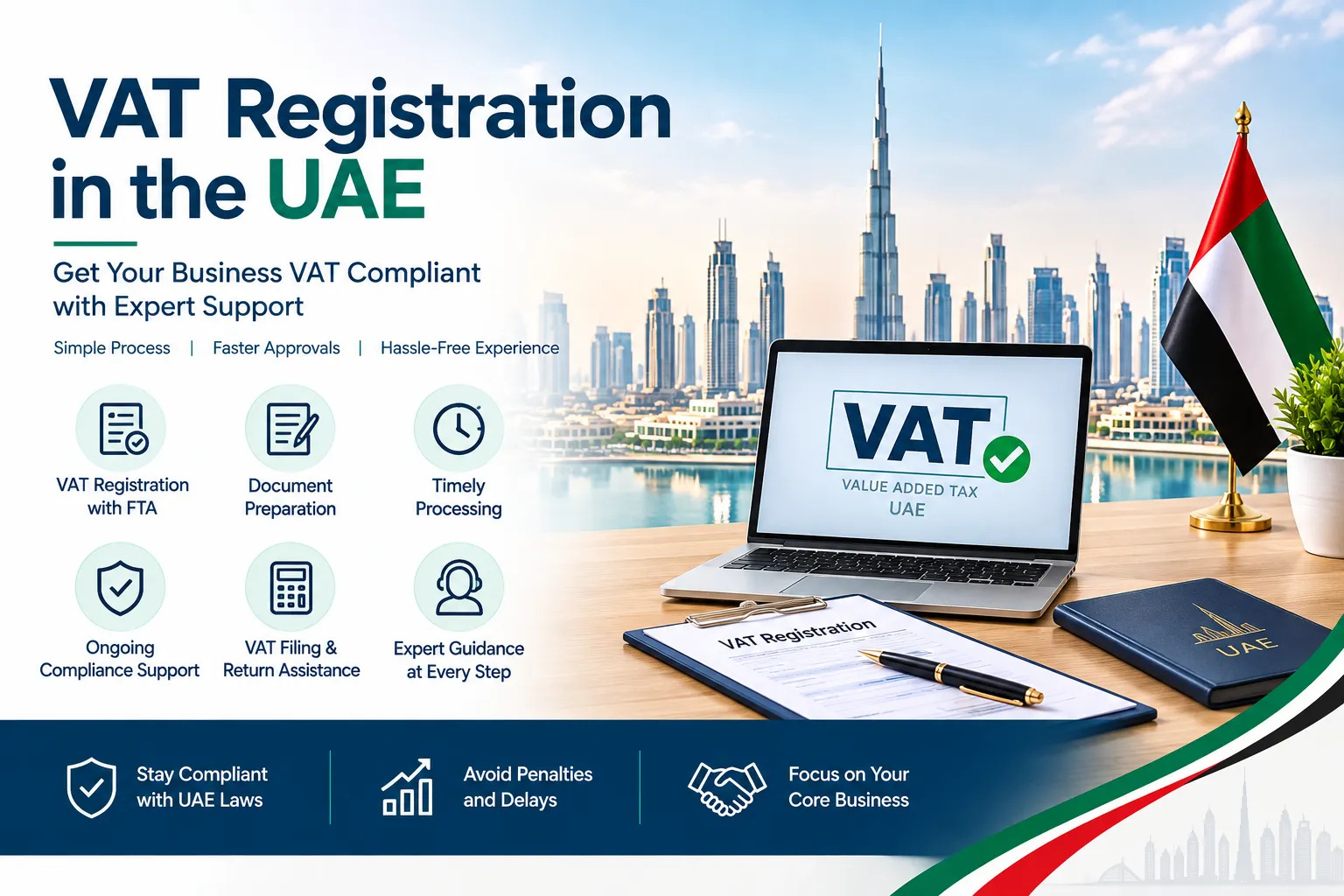
The VAT Registration UAE application is submitted electronically through the FTA’s EmaraTax platform.
To prepare and submit your application, follow the steps below:
Step 1: Register for an EmaraTax Account
Go to the official FTA website and create or log in to your EmaraTax account. Please complete the necessary account activation and verification processes.
Step 2: Make a Taxable Person Profile
Create the taxable person profile that is suitable and provide the business information required by the platform.
Step 3: Choose VAT Registration
Open the account of the taxable person and choose the VAT registration option.
Step 4: Supply business and financial information
Please provide details of the legal entity, business activities, taxable supplies, imports, turnover, and any other information as required.
Check the relevant threshold calculations. Ensure the application reflects the business’s real situation.
Step 5: Upload Supporting Documents
Upload the necessary documents in an approved format. Ensure all files can be read and supporting evidence is in line with the data entered in the application.
Step 6: Review and Submit
Read the application carefully before submitting it. If the FTA requests clarification or additional documentation, respond quickly.
Once approved, the VAT registration certificate and TRN will be downloadable from the taxpayer’s account.
According to the FTA’s service information, it estimates that it will take 20 business days from the time it receives a completed application to process an application. Actual processing may depend on the application and any additional information required.
Businesses should refer to the official VAT registration service for the latest instructions.
What Next After VAT Registration?
The VAT obligations of a business are just beginning with the TRN. Registered businesses shall have sufficient procedures to meet their continuing responsibilities.
These often include:
• Rendering valid tax invoices where applicable.
• Keeping accurate records of sales, purchases, and VAT.
• Calculating output VAT and recoverable input VAT.
• Timely filing of your VAT returns.
• Ensure timely payment of VAT.
• Maintain relevant accounting records and supporting documents.
When needed, updating registration details.
In addition, you should verify your assigned VAT return periods and filing deadlines through your FTA account.
If a business keeps good books, then it makes it easier for them to handle these responsibilities and to answer tax questions with evidence to back them up.
Why You Should Get Professional Help with VAT Registration
Tax rules can be complex, and the application process can be daunting, especially for new businesses unfamiliar with compliance processes in the UAE.
Professional help can help companies to determine eligibility for registration, help organize financial documents, review turnover calculations, and prepare your application.
A tax adviser can also help to establish invoicing procedures, recordkeeping practices, and VAT return procedures after registration.
If you need VAT registration help in the UAE for your business, PRO Hub offers tax and accounting services for companies operating in the UAE.
Its team can help businesses understand their registration needs and what documentation is required in their case. Discover more about the assistance with tax and accounting services provided by PRO Hub.
Before hiring a service provider, find out what kind of help they provide, their fees, responsibilities, and other services you may need after registration.
Conclusion
VAT registration is an important compliance consideration for businesses operating in Dubai and throughout the UAE. By understanding the mandatory and voluntary thresholds, preparing accurate documentation, and following the official registration process, businesses can be more confident in handling their tax obligations.
The requirements for VAT registration in the UAE differ depending on factors like taxable turnover, qualifying expenses, business residency, and the type of supplies made. Companies need to keep an eye on their financial activity and seek professional advice if they don’t know what’s going on.
If you need any help determining if you are eligible or how to prepare your application, you may wish to contact PRO Hub for professional tax and accounting support. A well-structured registration process can help build a stronger foundation for continued VAT compliance and business growth.
Frequently Asked Questions:
1. What is the mandatory VAT registration limit in the UAE?
The mandatory threshold for UAE-resident businesses is AED 375,000 in taxable supplies and imports over the last 12 months, or the expected amount over that threshold within the next 30 days, subject to applicable rules.
2. What is the voluntary VAT registration limit in Dubai?
The voluntary threshold is is AED 187,500. Eligible businesses may qualify based on taxable supplies and imports or qualifying taxable expenses in the relevant period.
3. What documents are needed to register for VAT in the UAE?
Typical documents are a valid trade license, company formation documents, identification of owners or authorized signatories, turnover declarations, financial records, invoices, and supporting contracts. Requirements will depend on the applicant’s situation.
4. How long will it take to get registered for VAT in the UAE?
The FTA estimates that a completed application will take approximately 20 business days to complete upon receipt. The actual time depends on the application and whether it requires further information.
5. Can a small business register for VAT voluntarily in the UAE?
Yes. An eligible business may voluntarily apply if it meets the applicable AED 187,500 threshold and other relevant conditions. It must also take into account the ongoing obligations that registration involves.
6. Does PRO Hub assist in VAT registration in Dubai?
PRO Hub offers tax and accounting services for businesses in the UAE. Inquire whether you are eligible to register, what documents are needed, how to apply, and whether there are any VAT compliance services you can take advantage of for a period of time.
Planning a Business or Legal Process in the UAE?
Get direct expert guidance for business setup and complete corporate PRO services in Abu Dhabi.
Comments (0)
Loading comments...